PREVIEW SITE · NOT YET PUBLISHED · CONTENT UNDER REVIEW
VIRTUAL ARCHAEOLOGICAL MUSEUM OF SPARTA
PREVIEW · A MULTI-YEAR, GROWING PROJECT

Virtual Archaeological Museum of Sparta

Laconia’s ancient heritage is scattered across museums worldwide. This virtual museum brings it back together on one screen, object by object, each with its find-spot, its present home and its documented history.

What this museum is

Bronzes made in Spartan workshops, cups painted in Laconia, and thousands of lead offerings from the Sanctuary of Artemis Orthia now sit in New York, London, Paris and elsewhere, as well as in Sparta itself. Nothing here is moved or claimed. The museum gathers, virtually, objects whose origin and ownership history are published by the museums that hold them, and links every card to that museum’s own record.

It has three wings: the World Collection of Laconian objects held abroad; the collection of the Archaeological Museum of Sparta; and Reconstructing Sparta, which uses Pausanias and the excavations to rebuild the ancient city’s plan and buildings.

This is a multi-year project. The starter set below is small on purpose: only objects we could verify today are shown, and the Roadmap sets out how it will grow.

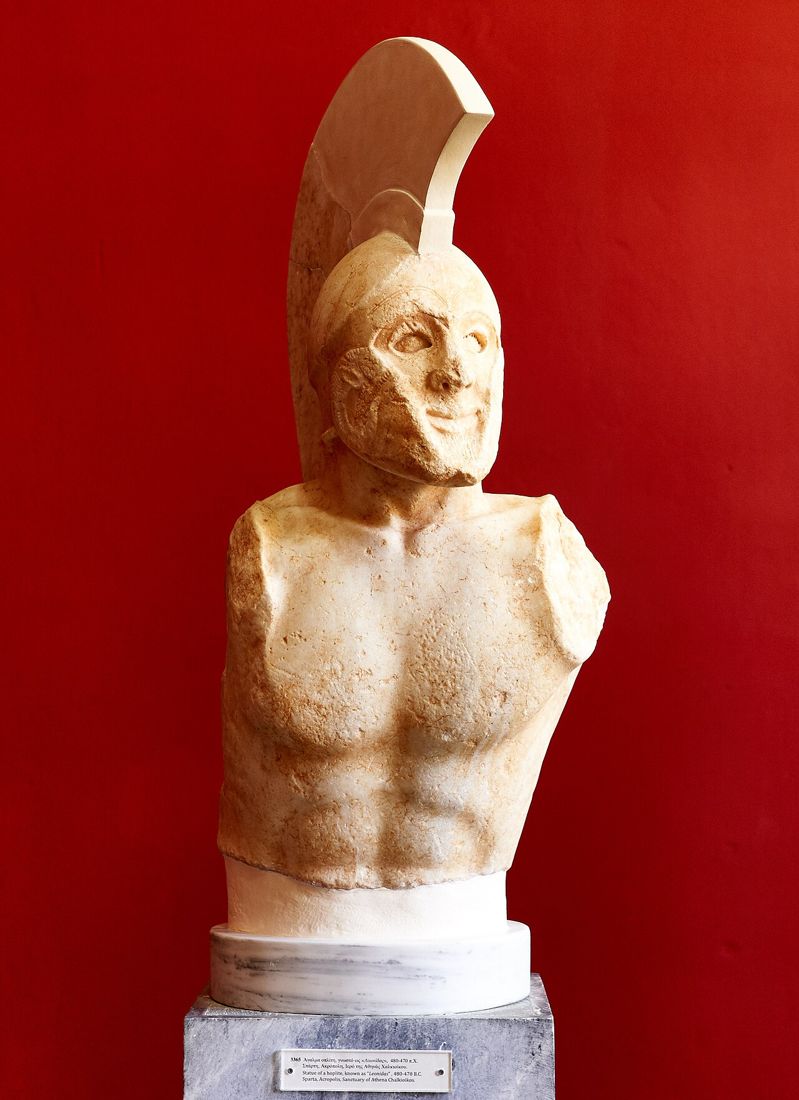
Marble bust of a helmeted hoplite, the so-called Leonidas
“LEONIDAS”Hoplite statue, 480–470 BC, found on the acropolis of Sparta in 1925. Archaeological Museum of Sparta, inv. 3365. Photo: George E. Koronaios, Wikimedia Commons, CC BY-SA 4.0.
OUR FIRST ARTIFACT

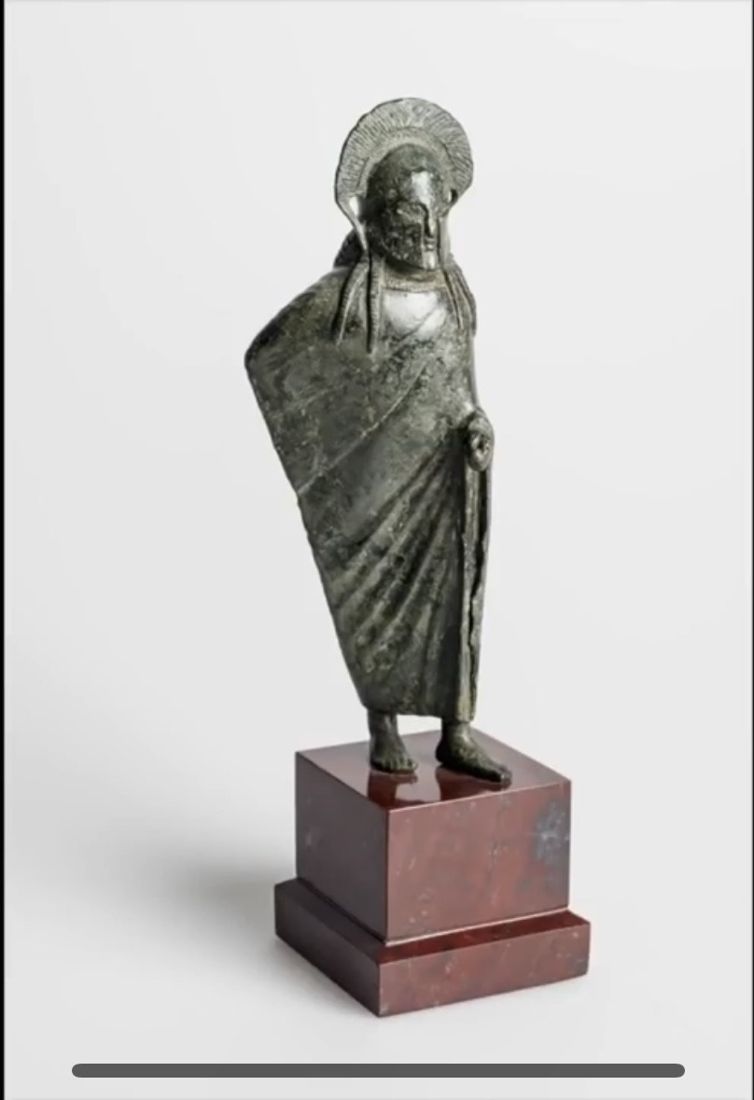
Our first artifact: a Spartan warrior in Hartford

A bronze officer in a crested Corinthian helmet and tightly wound cloak, made around 510–500 BCE, probably in Sparta. Bought by J. Pierpont Morgan in 1906 and given to the Wadsworth Atheneum Museum of Art in 1917 (inv. 1917.815). Photographs of the object at the museum by Pericles Gregoriou.

Draped warrior (“Spartan warrior”), bronze statuette
Find-spot to be confirmed

Draped warrior (“Spartan warrior”), bronze statuette

DATE
c. 510–500 BCE (late Archaic)
MATERIAL
Bronze (modern red stone base)
FIND-SPOT
Not published by the museum. The museum attributes it to “Greek, probably Sparta”.
HELD BY
Wadsworth Atheneum Museum of Art, Hartford, Connecticut
INV. NO.
1917.815
PROVENANCE
C. & E. Canessa, Paris (dealers); bought by J. Pierpont Morgan in 1906 as one of 52 ancient bronzes for £20,000; lent to the Victoria and Albert Museum, London; shipped to America in 1912; given to the Wadsworth Atheneum by J. P. Morgan Jr. in 1917 (credit line “Gift of J. Pierpont Morgan, 1917.815”). Size 15.1 × 5.3 × 3.2 cm (OUP, The Spartans, photo caption; Bowdoin gives 14.5 × 5 × 4.5 cm without base). Find-spot unpublished. Online collection record link pending (collection site unreachable 31 Oct 2026); details from the museum’s own wall labels.
RECORD
Museum record ↗

Image: Photograph of the object at the Wadsworth Atheneum Museum of Art by Pericles Gregoriou (owner); museum images are not openly licensed. Checked via: Wadsworth Atheneum wall-label PDFs (thewadsworth.org), Bowdoin College Museum of Art “Figures from the Fire” (2023), OUP The Spartans caption; museum collection record link pending, 31 Oct 2026
THE COLLECTION SO FAR

25 objects · 5 museums

Every object below links to its museum record.

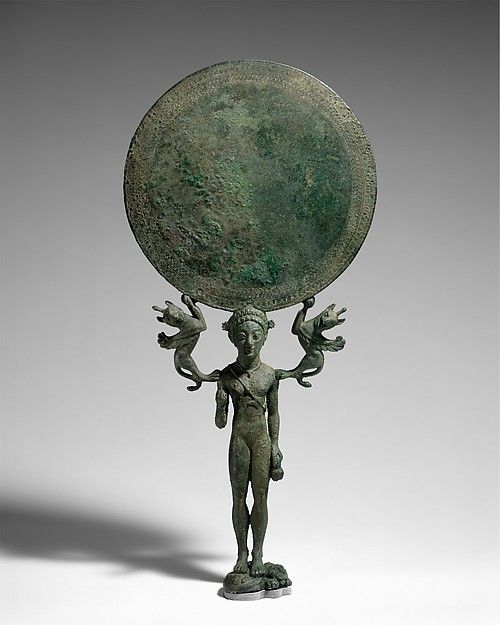
Bronze mirror with a support in the form of a nude girl
Find-spot to be confirmed

Bronze mirror with a support in the form of a nude girl

DATE
2nd half of the 6th century BCE
MATERIAL
Bronze
FIND-SPOT
Not stated in the Met's open-access record; Laconian attribution is the Met's.
HELD BY
The Metropolitan Museum of Art, New York
INV. NO.
38.11.3
PROVENANCE
Credit line as published by the Met: “Fletcher Fund, 1938”.
RECORD
Museum record ↗

Image: The Metropolitan Museum of Art, Open Access (CC0). Checked via: Met Collection API record (collectionapi.metmuseum.org), 31 Oct 2026

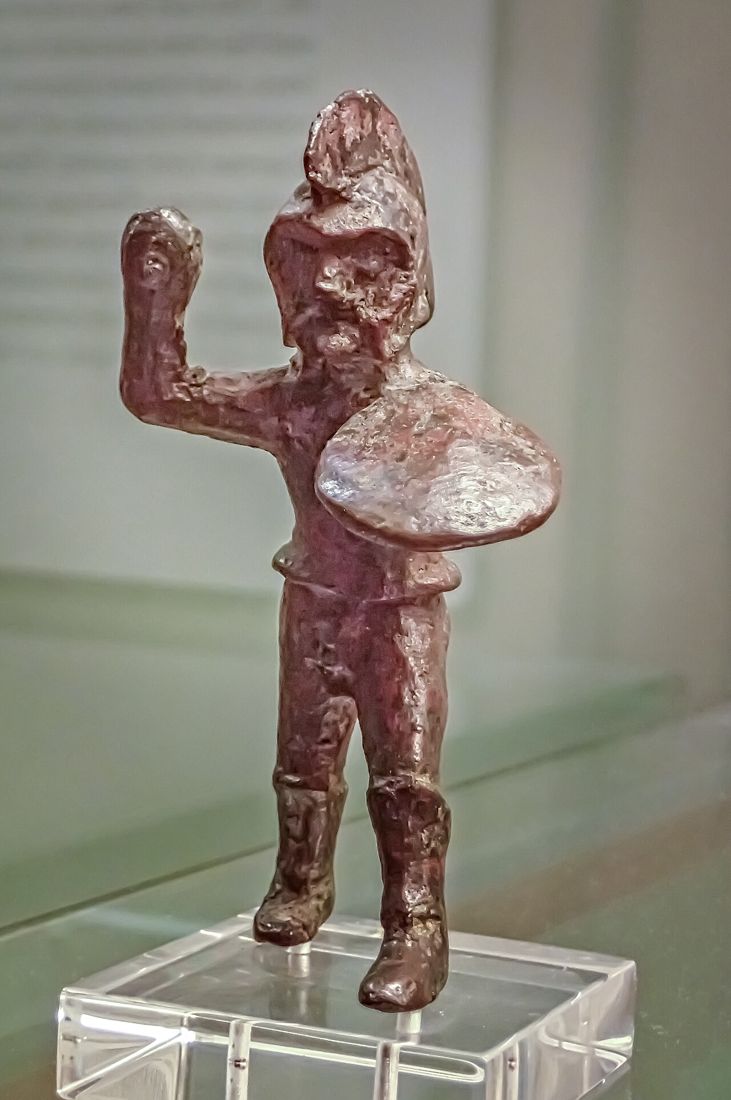
Bronze figure of a warrior
Find-spot documented

Bronze figure of a warrior

DATE
6th century BC
MATERIAL
Bronze
FIND-SPOT
Sparta (Greece), per the British Museum record
HELD BY
British Museum, London
INV. NO.
1929,1016.6
PROVENANCE
Purchased from Theodoros A. Zoumpoulakis (British Museum record). Described by the museum: “Bronze figure of a warrior. He once held a spear in his raised hand.”
RECORD
Museum record ↗

Image: Mary Harrsch / Wikimedia Commons, CC BY-SA 4.0. Checked via: British Museum Collection Online record (via web search index), 31 Oct 2026. Museum photo is CC BY-NC-SA, so a Commons photo is used.

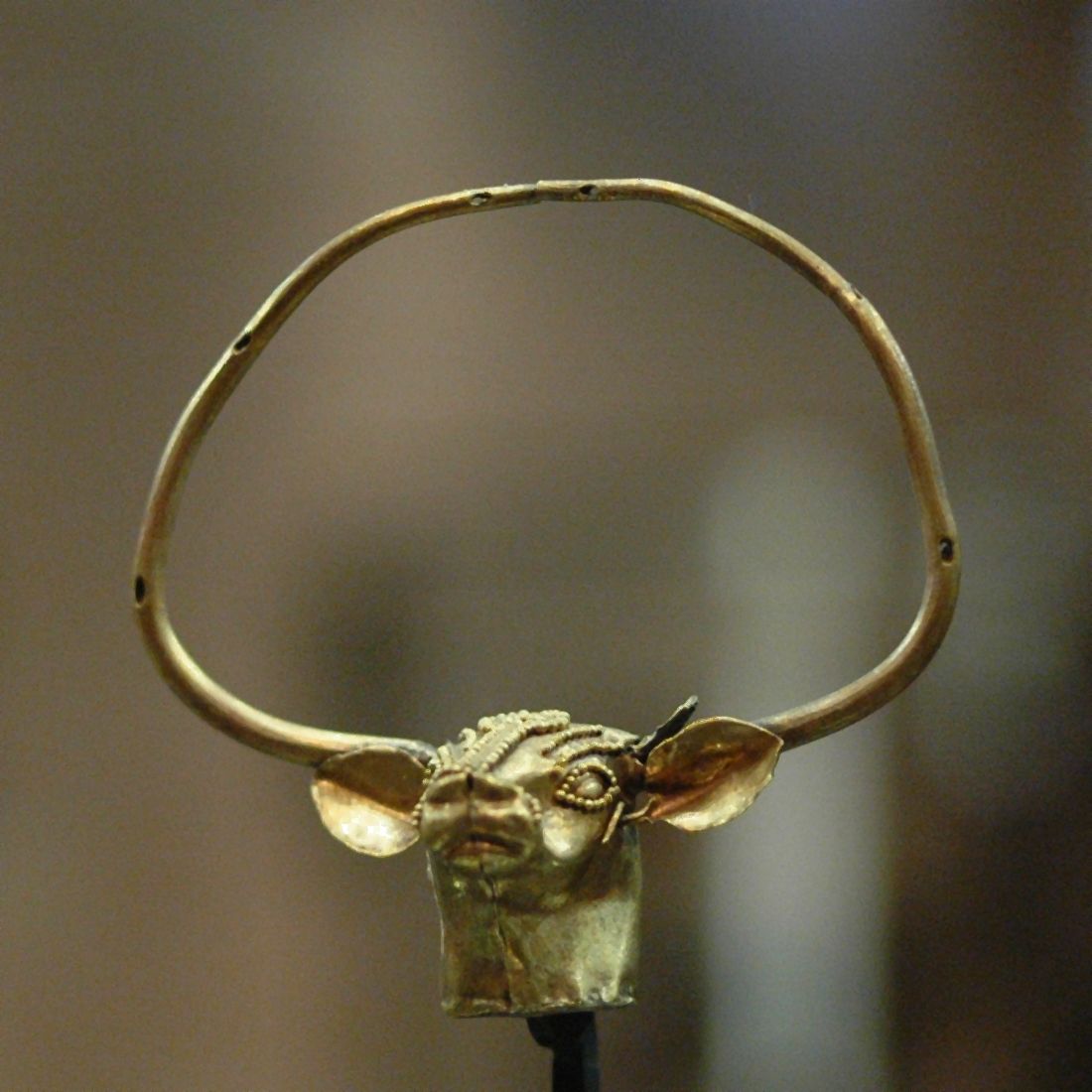
Gold bull’s head (jewel?)
Find-spot documented

Gold bull’s head (jewel?)

DATE
Mycenaean; 14th century BC (?) per the Louvre
MATERIAL
Gold (sheet, granulation)
FIND-SPOT
Amyklai (Amyclées), Laconia, per the Louvre record
HELD BY
Musée du Louvre, Paris
INV. NO.
MND 966 ; Bj 2081
PROVENANCE
Former collections Edme-Antoine Durand and Comte de Caylus; purchased 1825. The Louvre notes the body it was once attached to was stolen in 1830. Not on display.
RECORD
Museum record ↗

Image: Unknown artistUnknown artist / Wikimedia Commons, Public domain. Checked via: Louvre Collections record (via web search index), 31 Oct 2026. Note: the Commons file dates it to the 16th c. BC; the Louvre record says 14th c. BC (?) and is followed here.

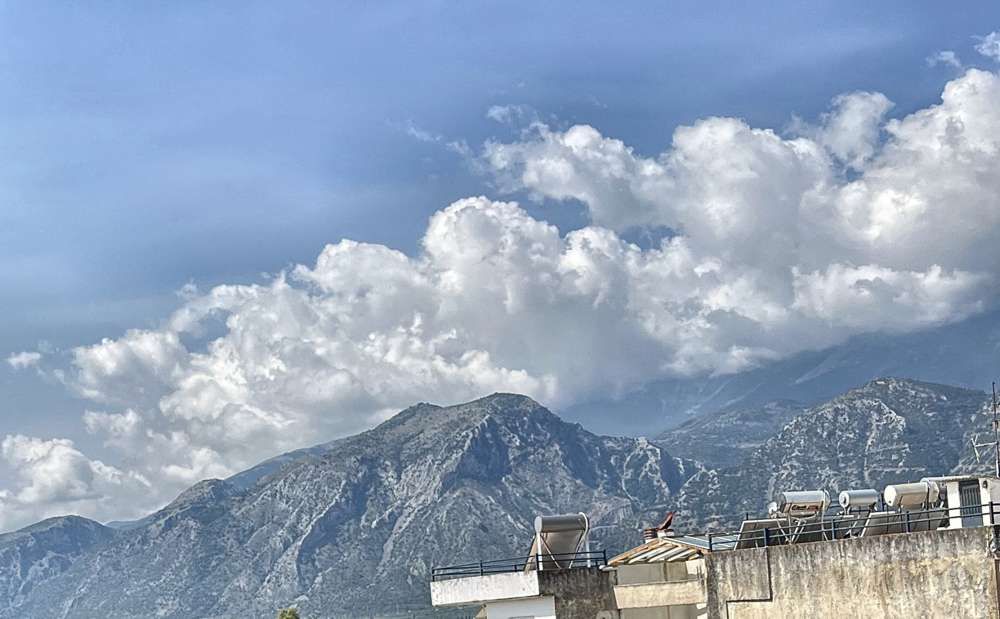
Mount Taygetos seen from Sparta
TAYGETOSThe mountain wall west of Sparta. Photo: Pericles Gregoriou.
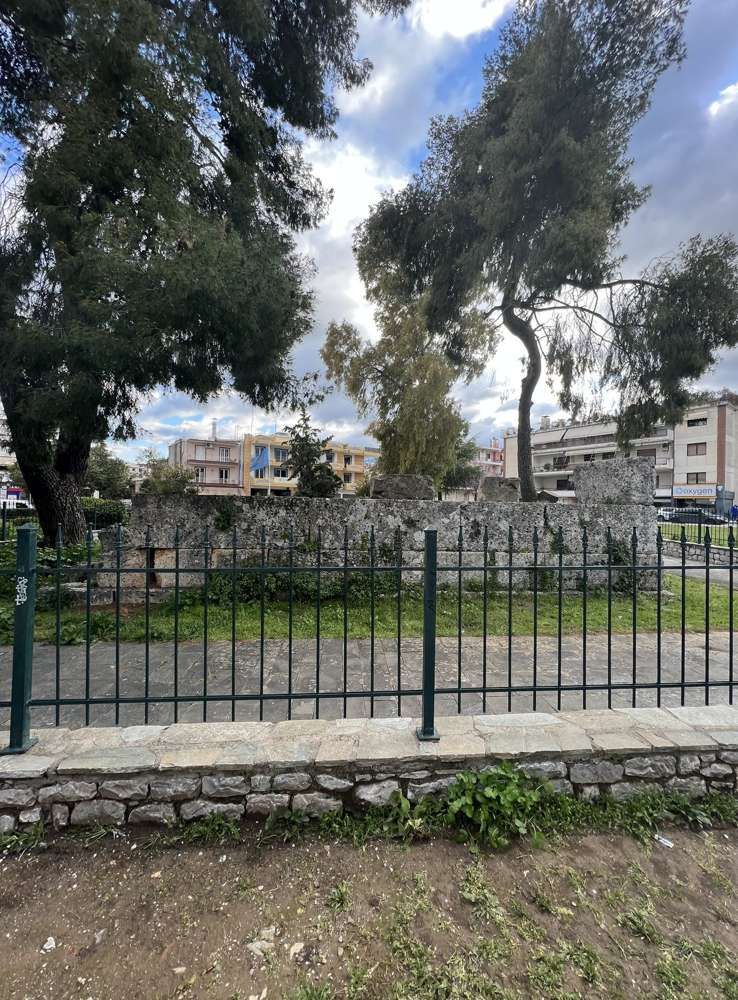
Stone remains called the Tomb of Leonidas
THE “TOMB OF LEONIDAS”In the modern town. Photo: Pericles Gregoriou.